
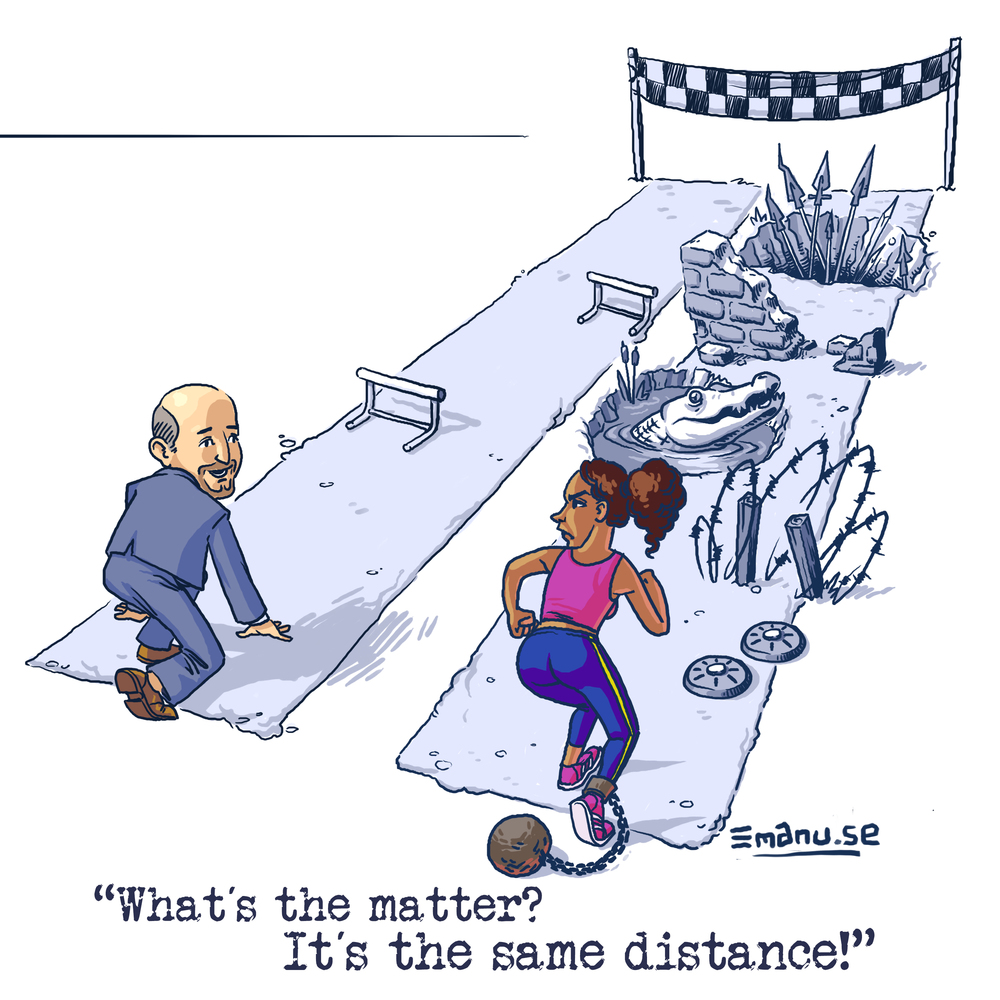
We love the idea of meritocracy. It tells a comforting story: that the best people rise to the top, that hard work gets rewarded, and that everyone has a fair shot if they just try hard enough. It makes success feel earned and failure feel explainable. But when you dig beneath the surface, the promise of meritocracy starts to fall apart. Not because people don’t work hard or want to be evaluated fairly—but because the systems we operate in aren’t neutral.
The Problem with Meritocracy
At its core, meritocracy assumes a level playing field. It assumes that the rules are clear, that everyone starts from the same place, and that outcomes are based on objective performance. But none of that is true.
What we often call “merit” is really a reflection of access, opportunity, visibility, sponsorship, and cultural fit. It’s shaped by who your manager is, how comfortable they feel with you, what projects you’re assigned to, whether you’re coached or left to sink or swim. It’s shaped by unspoken norms—how you speak, how you dress, whether you interrupt, whether you’re seen as confident or aggressive, assertive or difficult.
Even the metrics we use to assess performance aren’t as objective as we think. Who gets credit for a team win? Whose mistakes are forgiven? Who gets feedback early enough to improve? Bias seeps in everywhere—not always intentionally, but predictably.
The Damage It Does
Believing in pure meritocracy can do real harm. It convinces leaders that their talent decisions are neutral and earned, so they stop looking deeper. It leads employees to internalize failure as personal, not structural. It breeds resentment and disengagement when people see others succeed based on relationships, not results.
Most dangerously, it makes the system feel unchangeable. If we believe meritocracy is real, then there’s no need to question who gets promoted, who gets paid more, or who keeps getting left out.
What We Need Instead
We don’t need to throw out performance standards or stop recognizing excellence. But we do need to rethink how we define and reward merit. That starts with recognizing that fairness doesn’t come from treating everyone the same, it comes from making sure everyone has the same access to opportunity.
Here are nine actions leaders and organizations can take to move from myth to equity:
Audit Who Gets Opportunities
Track who gets stretch assignments, high-visibility projects, and leadership exposure. Look for patterns across race, gender, age, and other dimensions. If the same types of people are always getting the nod, it’s not a coincidence—it’s a structural issue. Use dashboards to visualize disparities and make gaps impossible to ignore. Share findings and take visible action to close them.
Make Sponsorship Intentional
Mentorship is nice. Sponsorship moves careers. Ensure all employees have access to leaders who will advocate for them behind closed doors. Don’t wait for these relationships to form organically—structure them. Pair high-potential talent with senior leaders, and include accountability for follow-through in performance reviews.
Standardize How Talent Is Evaluated
Get rid of vague feedback like “not a culture fit” or “needs polish.” Define clear, behavior-based criteria for roles and promotions. Calibrate performance reviews across teams to reduce subjectivity. Include real examples of what “great” looks like and train reviewers to recognize bias in language.
Train Managers to Recognize Bias
Most bias isn’t malicious—it’s habitual. Train managers to recognize patterns in who they support, how they give feedback, and what they perceive as leadership potential. Make this training real, not theoretical. Use live scenarios, manager scorecards, and self-audits to drive accountability.
Use Real-Time Feedback, Not Once-a-Year Reviews
Annual performance reviews often reflect recent impressions, not true contributions. Use ongoing feedback to give employees a chance to adjust, grow, and show what they’re capable of. Implement regular check-ins, crowdsource feedback, and train managers to provide specific and constructive input in the moment.
Broaden Definitions of Leadership
Stop promoting only the loudest voices. Recognize leadership in collaboration, influence, problem-solving, and emotional intelligence. Diverse teams require diverse leadership styles. Highlight these skills in job descriptions and make room for different ways of leading during talent reviews.
Expose Employees to Growth Early
Don’t wait for someone to “prove” themselves. Give them a chance to lead, present, and make decisions earlier in their careers. That’s how confidence and competence grow. Assign rotational roles, cross-functional projects, and client-facing responsibilities to more junior staff.
Collect and Act on Employee Experience Data
Don’t assume your processes are working equally for everyone. Survey employees regularly about fairness, access, and support. Use that data to address gaps. Cross-tabulate results by demographics and share actions publicly to build trust.
Tie Leadership Incentives to Equity Outcomes
If leadership effectiveness isn’t tied to how well they develop and elevate talent equitably, don’t expect them to prioritize it. Reward inclusive leadership. Incorporate equity metrics into bonus structures and promotion readiness criteria.
Final Thoughts
Meritocracy promises fairness but often delivers the opposite. Real equity takes work. It requires systems that see potential before it’s fully polished, that reward substance over style, and that ensure no one is left behind because they didn’t know the unwritten rules.
If you want your organization to truly win the talent war, stop waiting for merit to rise to the top on its own. Build the infrastructure that lets it rise in everyone.
Because if opportunity isn’t equally distributed, then neither is merit.